Academy History & Ethos
History
The 1970s building on Willowbank Road belies the 96-year history of St Aidan’s!
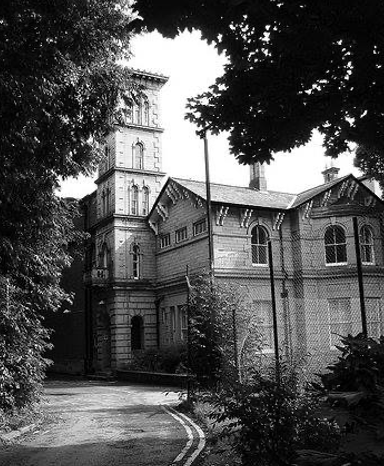
The origins of St Aidan’s date back to 1928 when St Mary’s Grammar School was opened in Bede Tower (Stockton Road) by Canon Smith, the then parish priest of St Mary’s to serve the Catholic boys of Sunderland as the town’s population expanded rapidly due to the success of the coal mining and ship building industries.
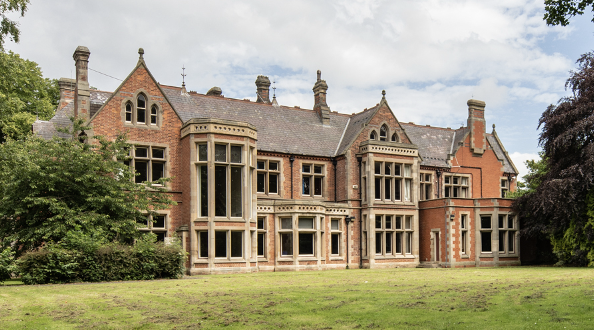
The Jesuits took over in 1935, transferring the school to The Briery on Ashbrooke Road the following year, when it was renamed Corby Hall. The name was then changed again in 1937, to Sunderland Catholic College, before becoming Corby School in 1939.
It was only when the Jesuits left in 1948, and the Christian Brothers took over, that the name finally became St Aidan’s. The school was firstly renamed as St Aidan’s RC Grammar School and remained a grammar school until 1973, when the school was reclassified as a comprehensive school and a new school block and gymnasium building was completed on Willowbank Road and linked to the old school site by a tunnel which remains to this day.
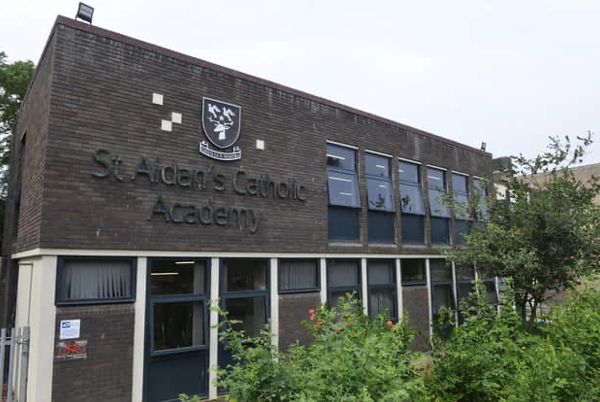
In April 2013, the school converted to an Academy. With over 1,000 students, St Aidan’s is now a larger than average-size establishment serving Sunderland boys, of all faiths and none, who are willing to uphold the special ethos of the Academy. St Aidan’s remains true to its founding principles: We are committed to the care and success of every boy in a way that is rooted in the values of the gospel and we nurture each and every student and encourage them on their journey to reaching their full potential.
We’re incredibly proud of our young men and the contribution they make in society such as their desire to advocate for young people around the world, their volunteering in Indian orphanages, their involvement in World War commemorations, and their respect and remembrance of the Holocaust.
In 2020, St Aidan’s joined the Bishop Chadwick Catholic Education Trust. The trust offers an educational experience to the young people of Sunderland and beyond that is second to none.
St. Mary’s Grammar School | Corby Hall | Sunderland Catholic College | Corby School | St. Aidan’s RC Grammar School | St. Aidan’s RC Boys Comprehensive school | St. Aidan’s Catholic Academy
Our school was built on firm educational foundations – here we share more about our journey.
|
St. Mary’s Grammar School The history of St Aidan’s can be traced back to 1928 with the founding of St Mary’s Grammar School by Canon Smith, the parish priest of St Mary’s at the time. The school was established to provide education for Catholic boys in Sunderland, responding to the town’s growing population driven by the success of the coal mining and shipbuilding industries. The original school building is now known as Bede Tower. |
 |
|
The Briery, Corby Hall, Sunderland Catholic College, Corby School, St. Aidan’s RC Grammar School In 1935, the Jesuits took responsibility for the school and, the following year, moved it to The Briery on Ashbrooke Road, renaming it Corby Hall. In 1937, the name was changed to Sunderland Catholic College, before becoming Corby School in 1939. Following the departure of the Jesuits in 1948, the Christian Brothers assumed control, and the school was officially renamed St Aidan’s. Initially called St Aidan’s RC Grammar School, the institution remained a grammar school until 1973. |
 |
|
St. Aidan’s RC Boys Comprehensive School, St. Aidan’s Catholic Academy In April 2013, St Aidan’s converted to an Academy. With a pupilpopulation of over 1,000, it has grown into a larger-than-average institution, serving boys from Sunderland of all faiths and backgrounds who are committed to upholding the Academy’s distinctive ethos. In 2020, St Aidan’s became a part of the Bishop Chadwick Catholic Education Trust, which provides an exceptional educational experience to young people in Sunderland and beyond |
 |
|
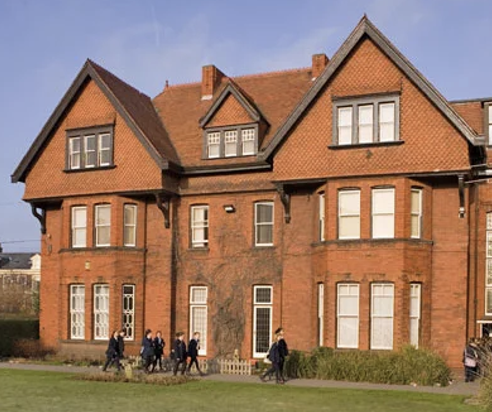
St. Aidan’s and St. Anthony’s Catholic Sixth Form In 2016 St Aidan’s Catholic Academy and St Anthony’s Girls’ Catholic Academy merged their Sixth Forms. |
 |